An Extended Apprenticeship
John Sturges at Columbia, 1946 – 1949

This essay first appeared in The Lady With the Torch: Columbia Pictures 1929 – 1959, published alongside the Locarno Film Festival retrospective programmed by Ehsan Khoshbakht in 2024. It is reprinted online here for the first time.

During the studio era, a few novice directors were handed the keys to the sportscar right away—a brilliant script for the first film, a great cast, a nice budget. John Sturges wasn’t one of them.
Sturges began as an editor at RKO in 1932, working on films such as Garson Kanin’s They Knew What They Wanted (1940), which turned out badly, and (uncredited) on George Stevens’s Gunga Din (1939), which turned out to be brilliant. During World War II, Sturges served with the U.S. Army Signals Corps, later transferring to the Air Force, and spent his time honing his skills on 37 training films and five documentaries, including Thunderbolt, which he co-directed with the great William Wyler.
Sturges left the service in 1946 and found that he didn’t have to search too hard for a job: Wyler had recommended Sturges to the boss of Columbia Pictures, the legendary Harry Cohn. The aspiring director was hired at the entry-level wage of $300 a week, which surely pleased Cohn, a world-class studio tightwad in a town full of them. In Glenn Lovell’s Escape Artist: The Life and Films of John Sturges, Sturges says, “This was a time when studios were making 30 to 40 pictures a year. By attrition, if nothing else, you’re going to wind up getting a crack at directing.”
That was true. Unlike the other major studios, the so-called “baby major” Columbia owned no theaters, meaning their films had to consistently appeal to distributors. Cohn sought profits by squeezing costs—such as salaries—and being prolific. As Sturges said, the output was 40 films a year or even more, most of them around 65 minutes, which were then rented to exhibitors for a flat fee. Script-wise these were the kind of stories that would largely move to television by the end of the next decade, watched at home by the same people who had once been happy to spend time in the moviehouse absorbing an hour or so of cheaply made entertainment.
“Hard to believe they even did stuff like that” said Sturges many years later, but they did, and the stuff gave moviegoers plenty of pleasure at the time. For an ambitious fellow like Sturges, there was also the hope of eventually landing one of the few higher-budget films that Columbia made every year, in an effort to ensure its name retained some prestige. In today’s eyes, the biggest virtue of a low-budget Columbia picture is simply the beauty and elegance of film, contrasted with the bright, flat, shadow-free lighting that characterized many TV dramas for many years. And at the studio there was a deep bench of acting talent to draw on. A programmer might give a character actor the chance at a lead and to show off the range he’d developed over years in the business.
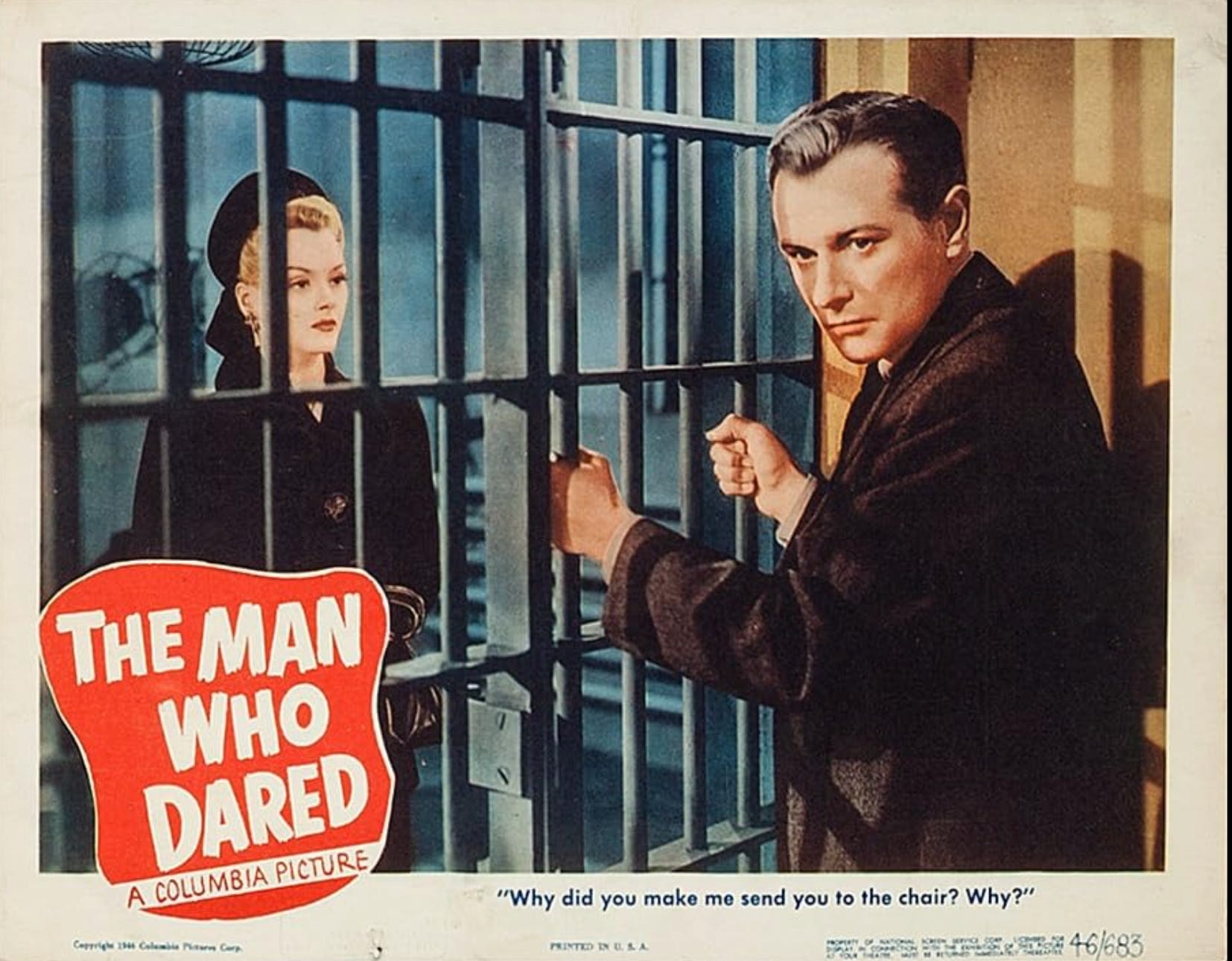
Accordingly, Sturges’ first assignment as director came to him after low-budget master William Castle was reassigned: a noir programmer called The Man Who Dared (1946), which starred George Macready. The versatile actor made the top-shelf Gilda for Charles Vidor at Columbia the same year, playing opposite Rita Hayworth, the biggest star on the lot. Macready’s lead role in Sturges’s maiden voyage shows the studio’s habit of shuffling talent around from A pictures to B and back again.
Macready plays a crusading reporter who wants to show the dangers of using circumstantial evidence to get a death-penalty conviction, and because this is Hollywood, he’s doing it by being tried for murder himself. Largely a courtroom drama, the film gives little opportunity for visual panache, even with a more promising set like a wharf. Yet a chase around a hospital and some adjoining rooftops energizes the director. In this and his other films at Columbia, adding an overhead angle always seems to spur some excitement from Sturges, as he films Macready (or the actor’s double) running through shadowed alleys, up and down ladders and around furnaces.
The chance to show off a little bit comes earlier in Shadowed, made the same year, and also a noir-styled programmer, but one where events are frequently played for amusement. Character actor Lloyd Corrigan, who seemed to show up in every B series from Tarzan to Maisie to Boston Blackie, for once has the lead. He plays a businessman whose golf habit finds him playing on an empty course, where he scores a hole-in-one. But his next swing drives the precious ball into the woods, where a criminal couple just happens to be stashing a body near an abandoned train. Corrigan’s eavesdropping on the murderers is nicely staged, with Sturges’s camera peering down through empty trestle tracks to see what’s going on.
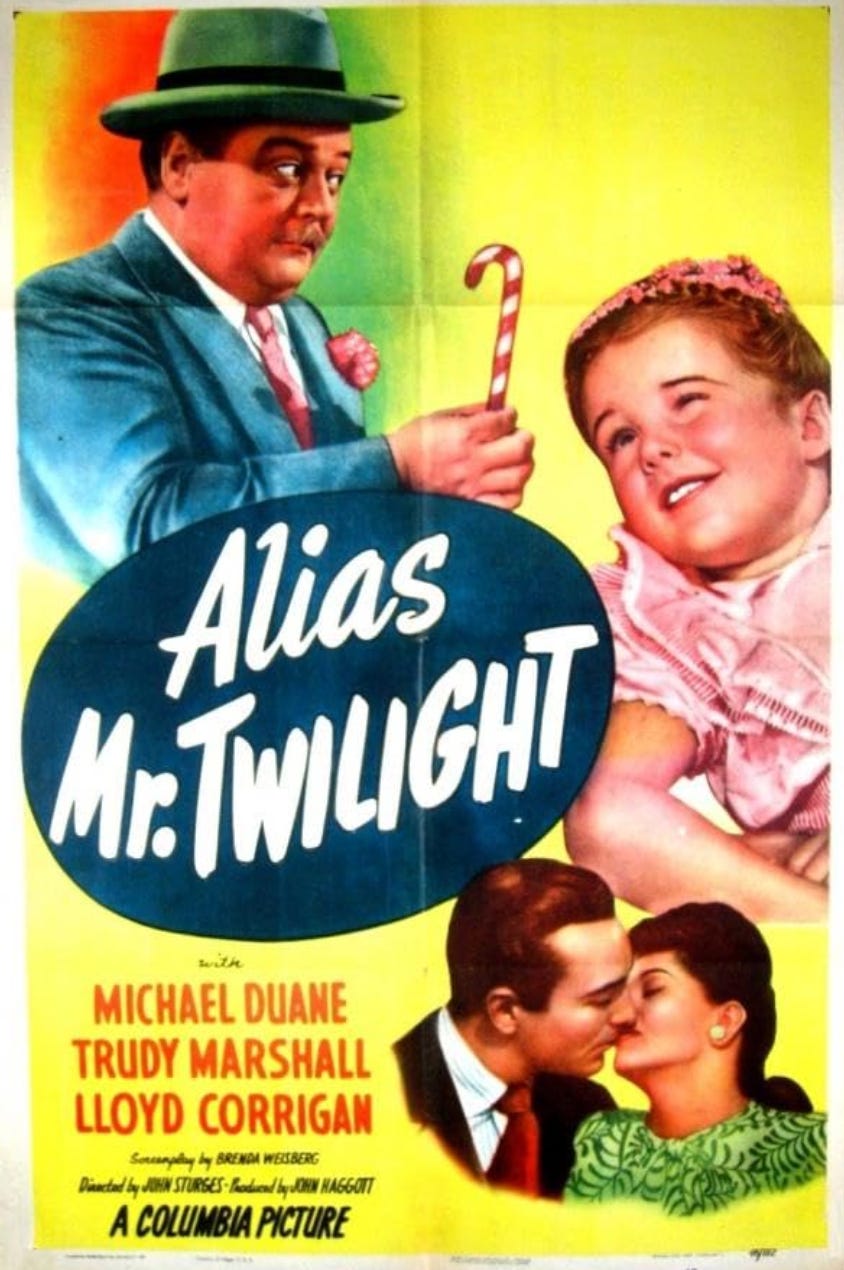
Both Sturges and Corrigan did even better with Alias Mr. Twilight, perhaps because Sturges always claimed he’d rewritten virtually every line of the script. This time Corrigan is a con man looking to pull one last big job (aren’t they always!) to provide for his cute little granddaughter. He also needs to keep the child out of the clutches of their relative, Rosalind Ivan—who was so adept at evil women in this era, via films like Fritz Lang’s Scarlet Street (1945), that she had earned the nickname “Ivan the Terrible.” If Sturges did indeed come up with most of the script, he did a fine job. The dialogue has verve—”I want a place in the country too,” says one character, “but I don’t want a high stone wall around it.” The various swindles are clever, as is the build-up to Sturges’s most vivid scenes, which take place on a dock and in a grungy hotel room.1
By the time he made For the Love of Rusty in 1947, Sturges was acquiring a reputation as someone who brought an added level of quality to his assignments. That did mean that he started to stretch his formerly trim 15-day shooting schedules, which naturally annoyed the studio brass. But it also meant this entry in the Rusty series—Rusty was a dog, and the films concerned a small-town adolescent played by Ted Donaldson—looked and played better than the others. “He treated it as if he was directing an ‘A’ project, a major film,” Donaldson told biographer Lovell. Harry Cohn overcame his chagrin at the extra time and expense and assigned Sturges two literary adaptations: Keeper of the Bees (1947), the third version of Gene Stratton-Porter’s final novel, and Best Man Wins (1948), an expanded and considerably altered version of Mark Twain’s immortal short story, “The Celebrated Jumping Frog of Calaveras County.” Both films got better-than-expected reviews because, said Keeper star Gloria Henry, “Sturges stood out amont the ‘B’ directors. He took his time and went for the nuances.”
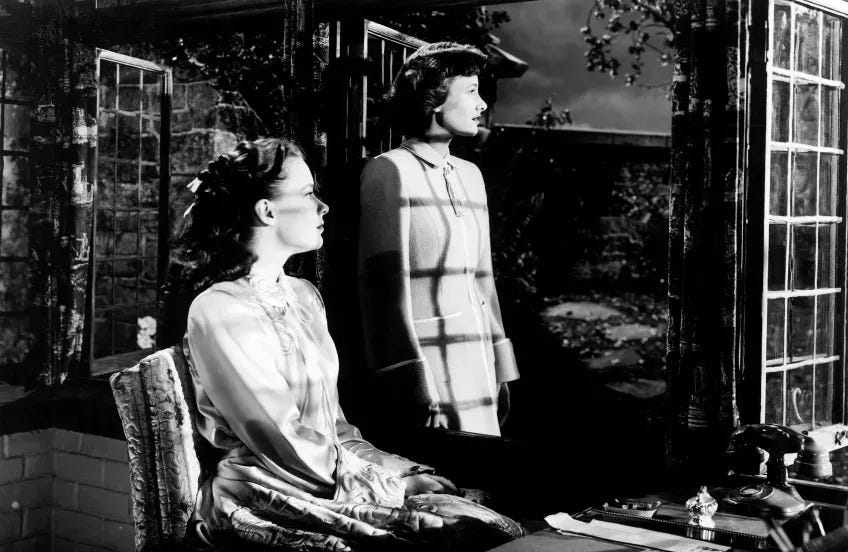
In between Keeper and Best Man Wins, Sturges got his first shot at an A picture with The Sign of the Ram (1948), and while Sturges wasn’t fond of the project, it turned out to be one of his best for Columbia, second only to The Walking Hills. The story is set in a big family mansion in Cornwall and concerns Leah St. Aubyn, who years ago was paralyzed in a swimming accident. Now Leah rules the house and the family from her wheelchair, writing hearts-and-flowers poetry for women’s magazines and generally being kind and patient. Or so it seems, until Leah finds that her now-grown stepchildren are ready to get married. Terrified at the thought of an empty house and permanent loneliness, she plots to keep everyone at her side, by any means necessary.
The black-and-white film bears some obvious thematic similarities to the Technicolor Leave Her to Heaven (1945), another tale of a woman’s psychotic abandonment issues. And like John M. Stahl’s film, Sign of the Ram revolves around its lead performer. Susan Peters was coming off an Oscar nomination when, on New Year’s Day 1945, a hunting accident left her paralyzed from the waist down. Determined to continue acting, she had optioned the novel, correctly perceiving Leah as a bravura role that ranges from “angel of the house” to a demonic echo of Rebecca’s Mrs. Danvers. Peters keeps her face serene for the most part, but her long, manicured hands tell the real story, as she arranges a sleeve or plays the piano like she plays the people around her.
Sturges later referred to Ram, rather unkindly, as a “talky vanity production,” and he disliked the lead performance. He felt that Peters, at 26, was too young to play Leah and that her acting was, as biographer Lovell put it, “full-blown gorgon.” In truth, Sturges wasn’t known for his facility with women’s performances, much less a women’s picture. Peters’s deep understanding of Leah’s fears failed to register with him. Yet he gives Sign of the Ram some superb atmosphere, undermining the set’s flouncy florals by lowering the camera to get the beamed ceilings in frame—the bars that are holding down Leah and her family. Instead of the “cage” lighting of a typical noir, the shadows suggest webs, particularly in one scene where two lovers plan a future together, quite unaware of the lady plotting their doom.
Sturges’s early years at Columbia amounted to “an extended apprenticeship of a kind that has long ceased to exist,” wrote Philip French in an obituary for the director. By 1949, his contract was almost up, and, writes Lovell, independent producers “Randolph Scott and Harry Joe Brown offered The Walking Hills, which they were developing at Columbia.” It was to be the first time Sturges directed a western, the genre that would encompass much of his best work. It is, however, a modern western, with a set of deceitful and back-biting characters that could easily have fit in a heist-driven noir. The movie’s cinematography, via Charles Lawton Jr., has a distinctly noir vibe, with the strong contrast between the brutal desert sun and the characters scrambling for any kind of shade.
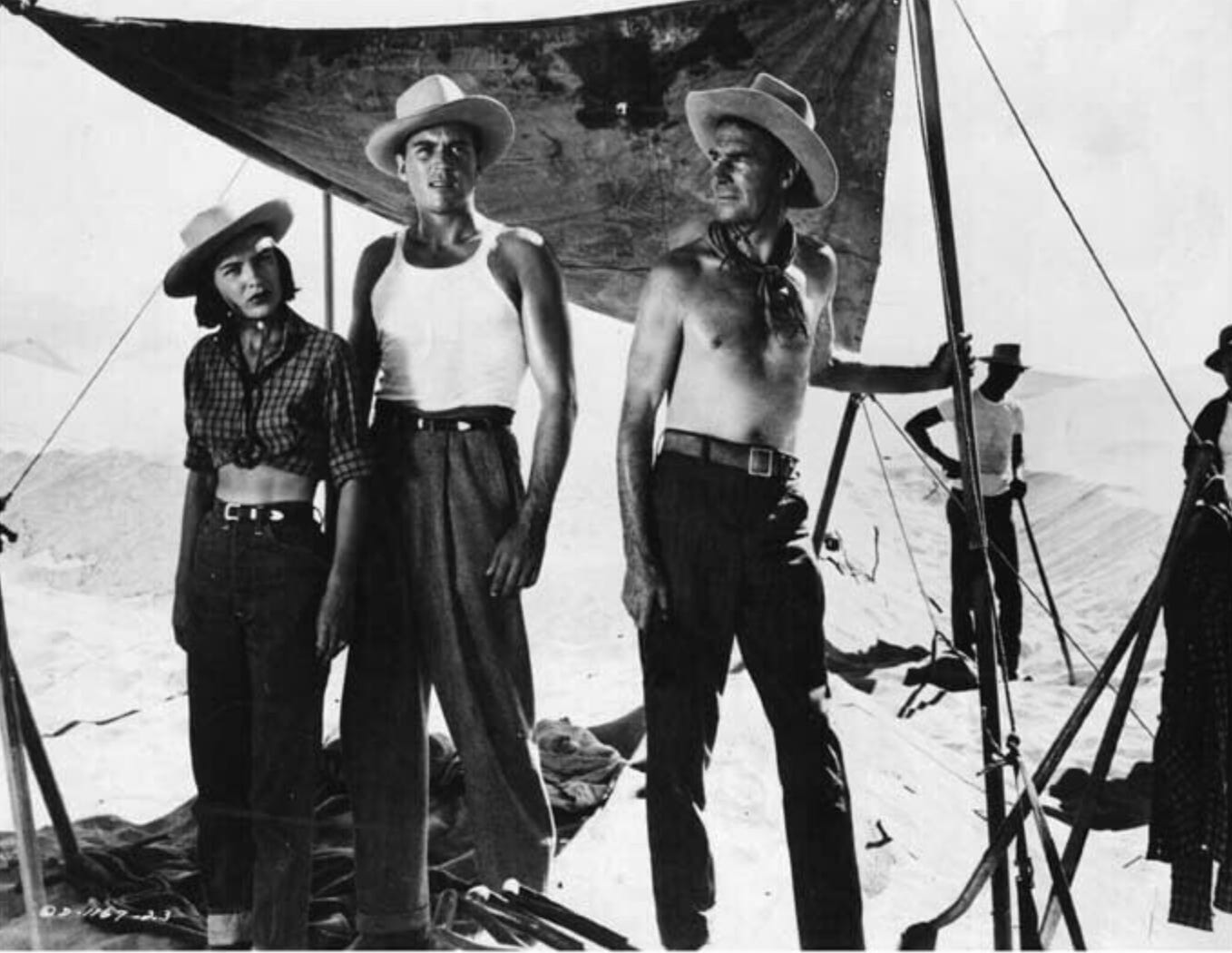
The script was by Alan Le May, who five years later would publish one of the most famous western novels of all time, The Searchers, later to be filmed by John Ford. The Walking Hills is not in that rarefied class, but it shares certain qualities with The Searchers—the desperation in a possibly futile quest, carried out while fighting against a brutal landscape. The “walking hills” are the ever-shifting sand dunes of Death Valley, and for the first time, Sturges rejoiced at being able to get off the backlot and film on location. His cast and crew may not have agreed, as daytime temperatures in the notorious desert rose to 120 degrees Fahrenheit.
As the film opens, Shep (William Bishop) is being tailed by the sinister Frazee (John Ireland), and slips into a cantina on the Mexican side of Mexicali. There’s a poker game in the back, where Old Willy (Edgar Buchanan) regales the players with the legend of a wagon train that tried to drag $5 million in gold across the murderous walking hills, and was lost forever. Innocent Johnny (Jerome Courtland) pipes up that he was just in that area and found a wagon wheel. True to the plot of John Huston’s The Treasure of the Sierra Madre from the prior year, gold fever infects the group, which includes laconic horse breeder Jim Carey (Randolph Scott) and the twitchy, blatantly untrustworthy Chalk (Arthur Kennedy). Bar owner Russell Collins (who would work again with Sturges in Bad Day at Black Rock) and its entertainer (the splendid blues singer Josh White) are forced to come along—no one must hear of this treasure hunt. But as they reach the spot and begin to dig, Chris (Ella Raines) rides up and cuts herself in; she feels she has a right, as she is the ex- of both Shep and Jim.
Tensions mount; the gang snipe at one another while they dig and chew bad food; Chris is torn between her two former lovers; gentle Johnny is shot. The Walking Hills is in its way just as talky as The Sign of the Ram, but Sturges, working with a milieu he was more in tune with, moves the scenes up and down the dunes and freights each eye-shift and overheard remark with possible betrayal. The climactic sandstorm, with its shovel-fight between Bishop and Ireland, is deservedly famous and must have been quite unpleasant to shoot.
The word was now out on Columbia’s up-and-comer. “This holds the interest throughout,” said the review in an exhibitors’ trade magazine, adding that the film didn’t seem to be something “that would shape up as big box office.” That was a bad prediction. The Walking Hills turned out to be Columbia’s biggest-grossing release for its year. By the fall of 1949, Sturges found himself with a new and far more gilded gig, at MGM.
Much later, nearly two decades after Sturges moved on from Cohn’s kingdom, the Hollywood columnist Bob Thomas attended the premiere of Ice Station Zebra (1968) and remarked on its warm reception. The movie, said Thomas, held “the audience’s attention despite the imagination-stretching adventures on screen. That is a rare kind of film and one in which director John Sturges excels”—and Sturges had readied his skills during his time at Columbia Pictures.
If you enjoy B movies from this era, and I certainly do, Alias Mr. Twilight is my favorite such effort from John Sturges. It’s on Youtube.
You're right about Sturges and the ladies. I sadly associate him with By Love Possessed, with Lana Turner looking like she dropped in on her way to a cocktail party and can't wait to leave. But I won't hear a word against Jeopardy, that nerve-shredding thriller featuring Barbara Stanwyck trying to save Barry Sullivan from drowning while fending off psychotic Ralph Meeker. There's not an ounce of fat on it, a fine example of lessons learned at Columbia Pictures.